
The Case for Naturally Sweetened Desserts
Advertisement
Ad space reserved for future use
Rethinking Indulgence
The prevailing assumption about dessert is that pleasure requires compromise. Rich, chocolate-covered confections are understood to be nutritionally bankrupt, their appeal inversely proportional to their health value. This binary thinking has created a false dichotomy in home kitchens: either accept the sugar rush and subsequent crash, or resign yourself to desserts that taste like virtue signaling.
Recent developments in home cooking suggest a different approach. By reconsidering the building blocks of indulgent foods, it becomes possible to create desserts that deliver satisfaction without the metabolic chaos of refined sugar and processed ingredients.
The Structural Problem with Traditional Candy
Conventional chocolate truffles and similar confections rely on a predictable formula: refined sugar for sweetness, heavy cream or butter for richness, and chocolate as the delivery mechanism. The result is a dense concentration of simple carbohydrates and saturated fat with minimal nutritional compensation. A typical truffle contains 10-15 grams of sugar per piece, nearly all of it refined, alongside negligible fiber or protein.
The issue extends beyond raw numbers. Refined sugar enters the bloodstream rapidly, triggering insulin spikes that can leave you hungry again within an hour[^5]. The absence of fiber means no satiation mechanism, no gradual energy release, and no sense of having consumed actual food rather than pure hedonic stimulus.
An Alternative Construction
Consider a different approach: using dates as the primary sweetener. Unlike refined sugar, dates bring fiber to the equation—research shows they contain 6.7 to 8 grams per 100 grams depending on variety[^1]—which slows absorption and helps maintain stable blood sugar. They also contribute potassium, magnesium, and B vitamins[^2], nutrients that refined sugar lacks entirely.
Pair dates with peanut butter and you introduce protein (approximately 7-8 grams per two-tablespoon serving[^3]) and predominantly unsaturated fats. More than 80% of peanut butter's fat content comes from heart-healthy monounsaturated and polyunsaturated sources[^4], a sharp contrast to the saturated fats in cream-based ganache. The protein creates genuine satiation, the kind that prevents you from mindlessly reaching for piece after piece.
Add a chocolate coating and you have something that looks and tastes like traditional candy but functions differently in your body. The chocolate remains because certain pleasures warrant preservation, but it serves as an accent rather than a vehicle for empty calories.
What This Looks Like in Practice
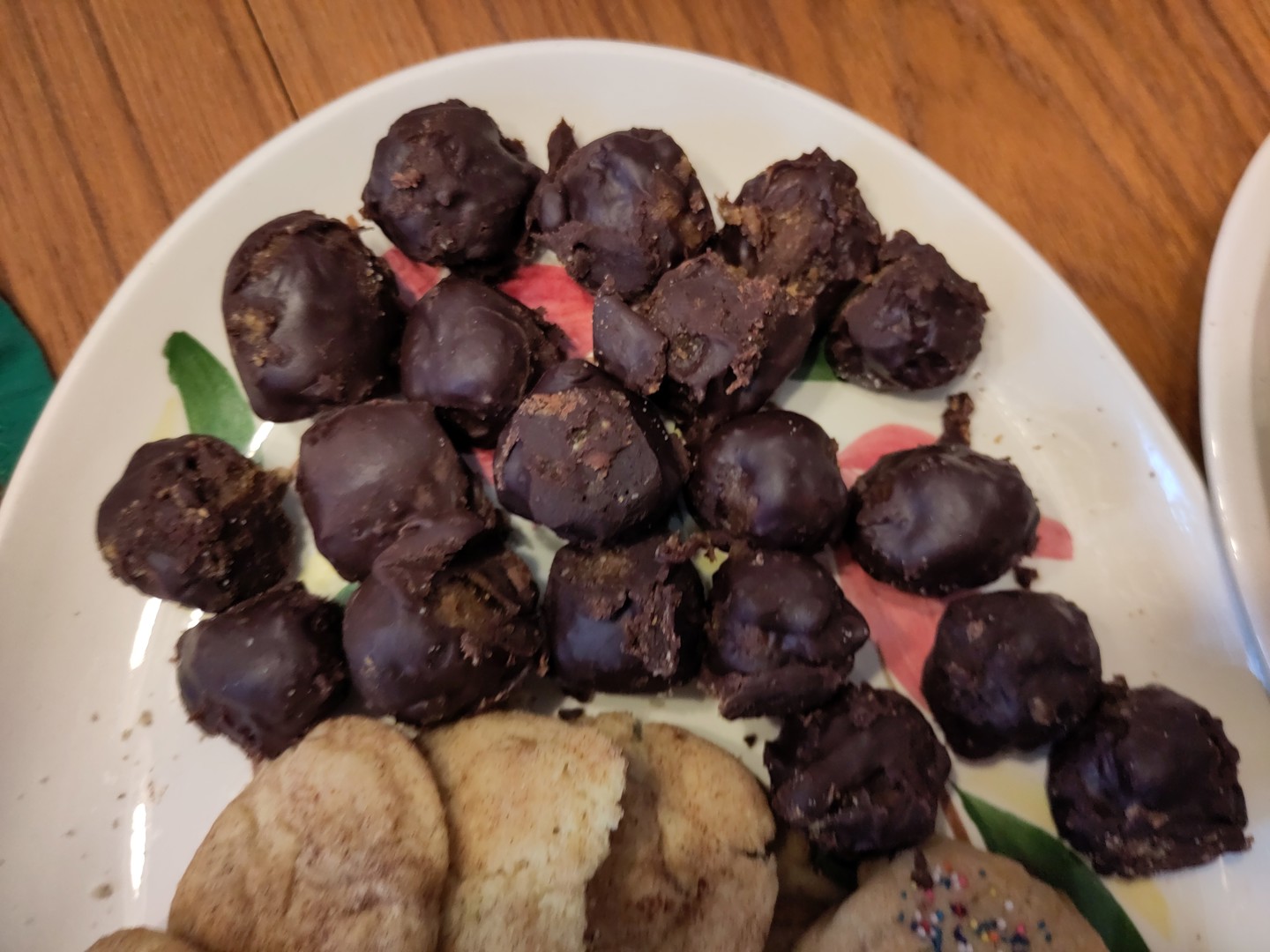
The Peanut Butter Chocolate Balls demonstrate this principle in action. Dates, peanut butter, water, and vanilla combine into a cohesive mixture that holds its shape when formed into spheres. If the dough proves sticky, fifteen minutes in the freezer firms it up for easier handling. Once shaped, the balls get rolled in melted chocolate and returned to the freezer briefly to set the coating.
The texture approximates what you expect from a truffle: firm chocolate shell yielding to a dense, sweet interior. The dates provide a caramel-like quality without actual caramel's butter and sugar content. The peanut butter contributes richness that reads as indulgence rather than compromise.
From a practical standpoint, these satisfy differently than traditional candy. The fiber and protein mean you feel full after fewer pieces. The energy release is gradual rather than immediate. You get the experience of eating something decadent without the crash that typically follows.
Beyond This Recipe
This particular combination of dates, peanut butter, and chocolate represents a principle rather than an isolated success. The idea that indulgent food must be nutritionally void reflects a failure of imagination, not an immutable law. By identifying which specific elements create the experience of indulgence—sweetness, richness, satisfying texture—and which merely fill space with empty calories, it becomes possible to redesign familiar foods.
The key lies in understanding what the body actually responds to. Sweetness can derive from fruit as effectively as from refined sugar. Richness comes from fats and proteins that provide satiation, not just mouthfeel. Texture benefits from whole food ingredients that happen to contain fiber and nutrients.
The more sustainable approach involves building indulgence from better materials rather than restricting portion sizes to absurdity or forcing yourself to enjoy desserts that taste like penance. The result is food that satisfies both immediate cravings and longer-term nutritional requirements, without requiring you to pretend that virtue tastes as good as pleasure.
References
[^1]: Al-Farsi, M., & Lee, C. (2008). Nutritional and functional properties of dates: A review. Critical Reviews in Food Science and Nutrition, 48(10), 877-887.
[^2]: Al-Shahib, W., & Marshall, R. J. (2003). The fruit of the date palm: Its possible use as the best food for the future? International Journal of Food Sciences and Nutrition, 54(4), 247-259.
[^3]: USDA FoodData Central Database. Nutritional composition of peanut butter.
[^4]: The Peanut Institute. (2025). Nutritional values of peanut products.
[^5]: Abbott Newsroom. (2023). What is a glucose spike? Understanding blood sugar fluctuations.
Advertisement
Ad space reserved for future use